In recent years, artificial intelligence (AI) has begun to play a transformative role across various industries, and dentistry is no exception. Traditionally, dental diagnostics relied heavily on manual interpretation of X-rays and other imaging techniques, which were prone to human error and time constraints. With AI, this is rapidly changing. By automating processes, improving accuracy, …


In recent years, artificial intelligence (AI) has begun to play a transformative role across various industries, and dentistry is no exception. Traditionally, dental diagnostics relied heavily on manual interpretation of X-rays and other imaging techniques, which were prone to human error and time constraints. With AI, this is rapidly changing. By automating processes, improving accuracy, and reducing the risk of errors, AI is not only enhancing the quality of care but also offering new possibilities for prevention and early diagnosis, particularly in high-risk areas like nerve damage.
1. Enhancing Diagnostic Accuracy
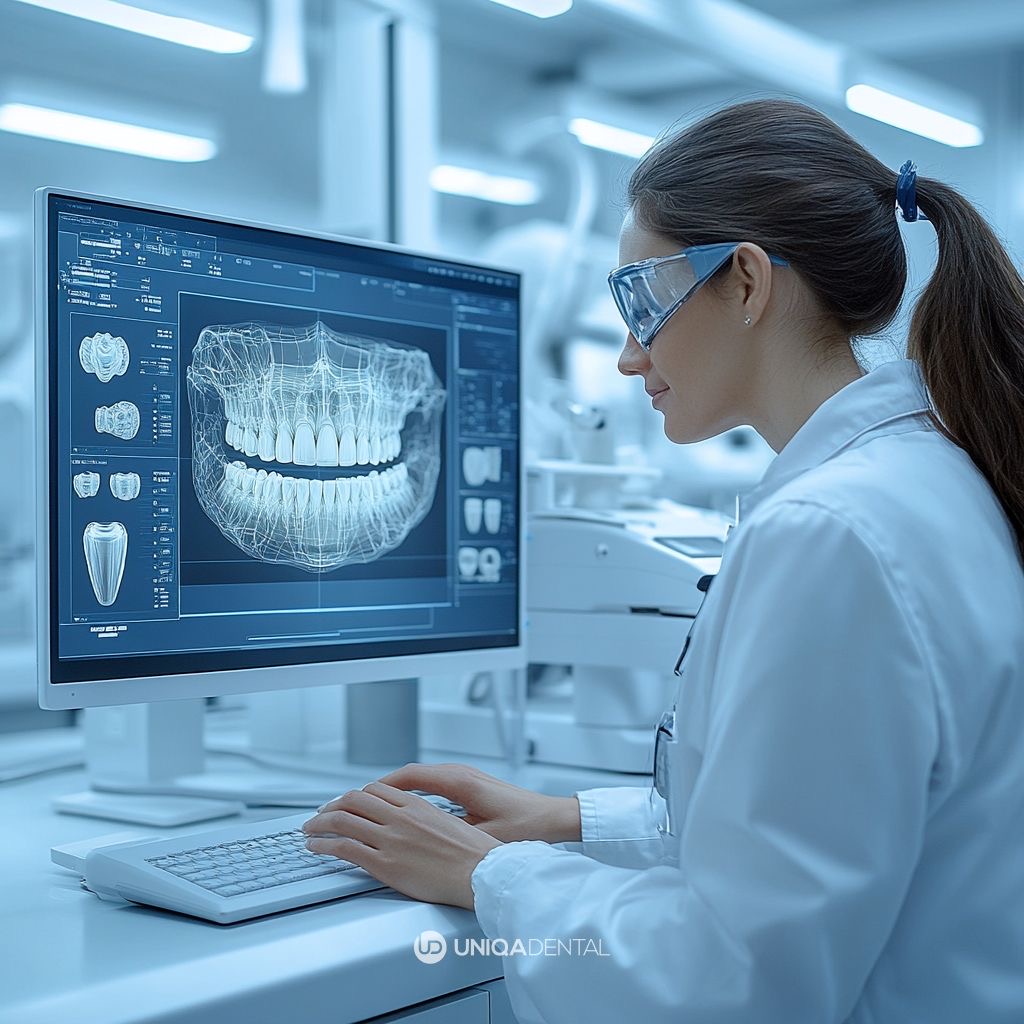
One of the most significant ways AI is revolutionizing dental diagnostics is through enhanced accuracy. AI models, particularly those based on deep learning, can analyze dental images, such as X-rays and CBCT scans, more efficiently and with greater precision than manual methods. For instance, AI algorithms are capable of identifying subtle signs of dental issues like cavities, infections, and even early-stage oral cancers, which can sometimes be missed by the human eye
Moreover, the accuracy of AI in identifying the Inferior Alveolar Nerve (IAN) is a major development. Nerve damage during dental surgeries can lead to serious complications, but AI’s ability to localize and segment nerves helps prevent such risks. This is particularly useful in dental implant planning, where precise nerve mapping is critical to avoiding post-surgical complications.
2. Streamlining Diagnostic Procedures
One of the biggest challenges in traditional dentistry is the time-consuming process of analyzing dental images and planning treatment. AI can significantly reduce the time required for these tasks. By automating the analysis of complex 3D images, such as CBCT scans, AI allows dental professionals to make faster, data-driven decisions.
For instance, CoDental AI’s solution focuses on reducing the time it takes to analyze and process dental images by automatically identifying key structures, like the IAN, allowing dentists to focus more on patient care rather than time-consuming manual segmentation. This streamlined workflow helps dental offices increase efficiency while maintaining or even improving the quality of diagnostics and care.
3. Preventing Nerve Damage
Dental surgeries, especially those involving implants, pose a risk of nerve damage, particularly to the IAN. This is where AI-powered tools can play a crucial role. With AI’s precise localization and segmentation capabilities, dental practitioners can plan surgeries with greater accuracy, ensuring that nerves are avoided during procedures. CoDental AI’s technology, for instance, offers a smart, automated solution for IAN localization, which enhances patient safety and minimizes the risk of nerve-related complications(Pitch Deck – CoDental AI).
By using AI in pre-surgical planning, dental professionals can also simulate procedures and predict potential outcomes, further reducing risks. This results in not only improved patient outcomes but also increased confidence in dental surgeries that involve high-risk areas, like the lower jaw.
4. Reducing Costs and Errors
In addition to improving safety and accuracy, AI is helping to reduce costs in dental care. Traditional diagnostic methods often require repeat imaging or multiple consultations, which can be both time-consuming and expensive. AI streamlines this process by providing more accurate results on the first attempt, reducing the need for additional tests or procedures.
AI also helps minimize human error, which can lead to misdiagnoses or improper treatments. By relying on AI for initial assessments and diagnostic support, dental professionals can reduce the chances of overlooking critical information in a patient’s scans. This translates to fewer errors, better outcomes, and a more efficient workflow, saving time and resources for both the dentist and the patient.
5. The Future of AI in Dentistry
As AI continues to evolve, its role in dentistry is expected to expand even further. In the near future, we may see AI tools becoming commonplace in routine dental exams, assisting with everything from caries detection to complex oral surgeries. The use of AI in diagnostics, combined with other technologies like robotics, is already leading to the development of fully automated procedures
World Economic Forum. For example, robots powered by AI are now able to perform certain dental surgeries with minimal human intervention, as demonstrated by recent advancements in robotic crown replacements
Harvard School of Dental Medicine.
The continued collaboration between AI developers, researchers, and dental professionals will be key to unlocking new possibilities in diagnostics and patient care. With its ability to analyze vast amounts of data, identify patterns, and offer personalized treatment recommendations, AI has the potential to reshape the way dental care is delivered on a global scale.
Conclusion
Artificial intelligence is revolutionizing dental diagnostics by improving accuracy, reducing errors, and preventing nerve damage. The integration of AI into dental practices not only enhances patient care but also increases efficiency, enabling dental professionals to provide faster and safer treatments. As the technology continues to evolve, AI’s role in dentistry will only grow, driving innovations that will redefine the future of dental care.
Book a Consultation
It’s easy and free!